Starting point: routine that eats profit
In this case study we show how automating requests in logistics with an AI agent took routine work off the staff. Our client is a company specializing in road freight. The tender department consisted of several managers who solved typical but extremely labor-intensive tasks every day:
- 24/7 monitoring: Tracking dozens of trading platforms by hand.
- Spam filtering: Manually screening out unsuitable lots by weight, route, cargo type and budget.
- Counterparty checks: Time spent checking the customer's reliability before submitting a request.
- Response speed: The human factor: a manager cannot react instantly around the clock.
The company's growth ran into the impossibility of scaling its staff in proportion to the number of requests handled. Increasing payroll for mechanical work was economically unviable.
The solution from Digital Structures: an AI agent instead of a human operator
Instead of offering yet another “request tracking system”, we chose end-to-end automation. Our team developed an AI agent for collecting and submitting requests, which runs inside the client's closed perimeter. We used a Python technology stack for parsing and data analysis and the n8n no-code tool for process orchestration.
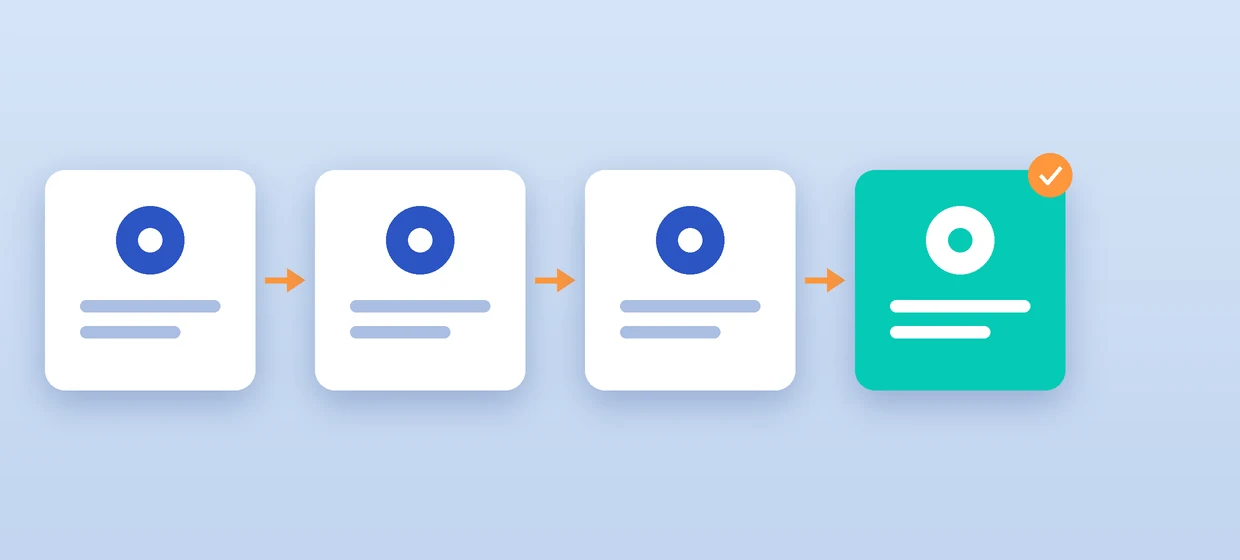
How the agent works:
- Continuous monitoring: The agent scans target logistics platforms and closed tender systems 24/7.
- Semantic analysis: The neural network analyzes the text of a lot not by keywords but by meaning. It understands that “20-ton truck, reefer, SPb-MSK” is a target request even if the description says “refrigerated transport from St. Petersburg to Moscow”.
- Automatic reliability check: Integration with counterparty verification services (based on OSINT tools) takes a fraction of a second.
- Preparing and sending the commercial proposal: The agent fills in the request form on the platform by itself, inserting the company's data, rates and terms from a pre-configured policy.
A key aspect: on-premise security
It is important to note that all the work was carried out inside the client's perimeter (ON-PREMISE). Data on rates, routes and customers is not sent to public cloud services such as ChatGPT. This fully meets the information security requirements that we put first when deploying AI in business processes.
TakeawayThe AI agent runs inside the client's perimeter, so rates, routes and customer data never go to public cloud services.
Results of the deployment in numbers
Two months after the pilot project was launched, the following changes in the department's business indicators were recorded:
| Indicator | Before AI | After AI |
|---|---|---|
| Response time to a lot | 15-30 minutes | 5-10 seconds |
| Share of tenders won | ~8% | ~15% |
| Employee time spent on routine | 6 hours a day | 0 hours |
| Lots covered per day | ~200 (daytime) | More than 1000 (around the clock) |

Key economic effect: The company wins more tenders thanks to instant reaction, while the number of managers has not increased. Employees were moved from mechanical work to complex negotiations and building relationships with key partners.
TakeawayThe agent responds to lots within seconds and around the clock, so the company wins more tenders without expanding its staff, and managers focus on negotiations.
Why this works for any business with routine purchasing or sales
This case is not a solution unique to logistics. Using a similar scheme, we deploy AI agents in:
- Sales: Automatic preparation of commercial proposals based on an incoming request and the company's knowledge base.
- Procurement: Monitoring platforms (Avito, commercial tenders) for purchases of equipment or materials.
- Customer support: Automatic replies to typical requests, generating a solution from the internal knowledge base.
Frequently asked questions
What is an AI agent for processing requests?
It is a neural-network-based program that monitors platforms by itself, selects suitable lots by meaning, checks the counterparty and fills in the request according to a pre-configured policy.
How to automate bidding in freight tenders?
Deploy an AI agent that scans logistics platforms and tender systems around the clock, filters lots by weight, route, cargo type and budget, and sends proposals with the company's rates. In this case, response time to a lot fell from 15–30 minutes to 5–10 seconds.
Is it safe to trust AI with data on rates and customers?
Yes, if the agent is deployed inside the company's perimeter (on-premise): then data on rates, routes and customers is not sent to public cloud services such as ChatGPT.
Do you need more staff as the number of requests grows?
Not necessarily. In this case the agent took over the routine: coverage grew from ~200 to more than 1000 lots a day, headcount did not increase, and managers moved on to negotiations with key partners.
Where else can an AI agent be used besides logistics?
In sales to prepare proposals from an incoming request, in procurement to monitor Avito and commercial tenders, and in customer support for automatic replies from the internal knowledge base.
Conclusion
Artificial intelligence in business is not a distant future but a tool for raising operational efficiency that is available today. The request automation case shows how revenue can be grown without inflating staff and while keeping full control over data.
Want to find out what routine AI can take off your employees?
Contact us to arrange an AI adoption strategy session. We will analyze your business processes and show you the growth points.