Business process automation means turning routine operations into a working system: requests, documents, reporting and data exchange between CRM, 1C, email and messengers run with no manual data transfer and no lost emails. Digital Structures delivers such projects on a turnkey basis, from the process survey to the launch and further development of the system. Below we explain which problems automation solves, what the work includes, how it is carried out and what determines the timeline and cost.
- 2014
the year we started delivering projects for large and mid-sized businesses - 5 stages
from the process survey to system development
Which problems automation solves
Routine looks much the same in most companies. A manager copies a request from the website into the CRM, an accountant types the same data into 1C, a report for management is assembled by hand from several spreadsheets, and an important email gets lost in a shared inbox. Each of these operations takes a few minutes, but together they eat up hours of working time and create errors that later have to be found and fixed.
Automation removes these steps:
- Manual data transfer. Systems are connected to each other, and information is entered only once.
- Duplicates and discrepancies. When data has a single source, the figures in CRM, 1C and reports match.
- Lost requests and emails. Every inquiry enters the system and gets an owner and a status.
- Slow approvals. Documents follow a defined route instead of being forwarded by email and in messengers.
- Reports on request. Managers see key figures on a dashboard without waiting for someone to compile them.
What business process automation includes
A project is built from several blocks. Not every company needs all of them at once: the scope is defined during the survey, based on your goals and on where the most time is lost.
Process audit and description
We find manual operations, duplicated data and bottlenecks, and describe the process “as is” and “as it should be”. This becomes the basis for the specification and the effect estimate.
System integrations
We connect CRM, 1C, email, messengers, your website and external services through APIs, so that data is entered once and not transferred by hand.
Document flow and reporting
We set up document templates, approval routes, automatic reports and dashboards for managers.
AI agents in processes
Wherever it saves employees hours, we bring in AI agents: they sort requests and emails, check documents and prepare replies. Read more in our article on AI agents for business.
Low-code on the Tablis platform
If your processes live in Excel spreadsheets, we quickly turn them into a single system with roles, processes and reports on our low-code platform Tablis.
Training and development
We train employees to work with the system and keep developing it after launch.
How the work goes: project stages
We do not start with development. First we need to understand how the process actually works and what exactly should change in it; otherwise automation would lock in a poor way of working instead of fixing it.
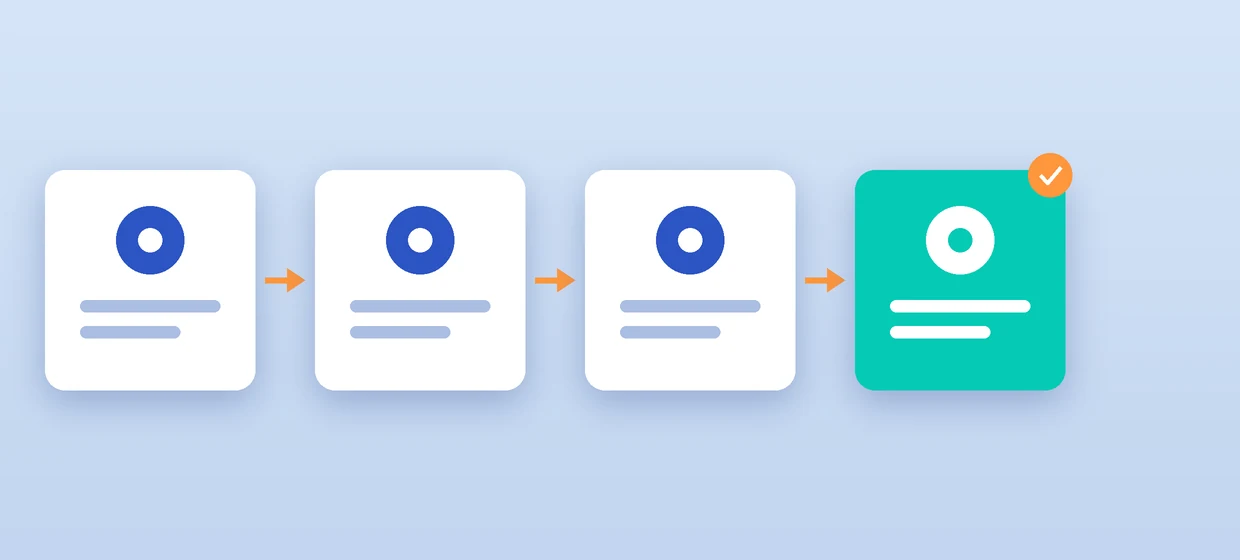
- Survey. We study processes, systems and data, and fix the goals and metrics by which the result will be assessed.
- Design and effect estimate. We prepare the architecture, the technical specification and a payback forecast.
- Development and integrations. We configure the system and connect it to your services.
- Launch and training. We migrate data, train employees and support the start.
- Development. We keep improving the system as the company grows.
TakeawayWe calculate the payback of automation before the project starts, at the design stage. You decide on development when the expected effect is already clear.
Who it is for and examples
Since 2014 we have been delivering projects for large and mid-sized businesses. Automation pays off where there are many repetitive operations and several systems that do not exchange data with each other.
Signs it is time to automate
- the same data is entered into several systems;
- requests and emails get lost or are handled late;
- approving a document takes reminders and forwarding;
- reports are compiled by hand and their figures do not match;
- records are kept in scattered Excel spreadsheets.
Examples from our projects
- Manufacturing. Digitalization of the production cycle: the system links machine tools with sensors through a single data bus, predicts equipment wear and creates purchase requests for raw materials by itself.
- Logistics. An AI agent for freight transportation requests monitors platforms around the clock, filters lots, checks counterparties and submits the request itself.
- Services. Design and implementation of an ERP system for an agency's processes.
What determines the timeline and cost
Business process automation has no fixed price: the cost depends on the scope of work, which becomes clear after the survey. The timeline and budget depend on:
- the number of processes and departments the project covers;
- the number of systems to integrate and whether they have APIs;
- the volume and quality of the data to be migrated;
- whether AI agents are needed and which tasks they will perform;
- whether the solution can be built on the Tablis platform or requires custom development;
- how many employees need training.
It is often more cost-effective to start with the one process where time losses are most visible, get a result and then expand the system.
Frequently asked questions
How much does business process automation cost?
The cost depends on the number of processes, the systems to integrate and the volume of data. We give an exact estimate after the survey, together with a payback forecast.
How long does business process automation take?
The timeline depends on the scope: the number of processes, integrations and the volume of data to migrate. We fix it in the project after the survey, before development begins.
Can we find out the payback before the project starts?
Yes. We calculate the effect and payback before the project starts, at the “Design and effect estimate” stage.
Which systems do you integrate automation with?
We connect CRM, 1C, email, messengers, your website and external services through APIs, so that data is entered once and not transferred by hand.
Do you train employees to work with the new system?
Yes. At launch we migrate data, train employees and support the start, and after launch we develop the system as the company grows.
Let's discuss automating your processes
Tell us which operations take up most of your team's time, and we will suggest where to start and estimate the effect. More about the service is on the Business process automation page, and you can reach us via contacts. You can also book a free consultation.