Vibe coding is when a neural network writes the code, for example in Claude Code or Cursor, while a person sets the task, checks the result and says what to fix. For this approach, a programming language is chosen by three questions: will the project run on any rented server without lengthy setup, how many tokens are spent on generation and fixes, and how well does the model know the language. The short answer is Python. Below we explain why, and when Go or PHP are a better fit.
- Python
the default choice - Go
when you need a single executable with no dependencies - PHP
when all you have is ordinary shared hosting - 1 GB
of memory is enough for a small Python website
What "runs on any server" means
A dedicated server or VPS almost always runs Linux: Ubuntu, Debian or AlmaLinux. Ideally, the language is already in the system or installs with one command, and the project moves by simply copying files.
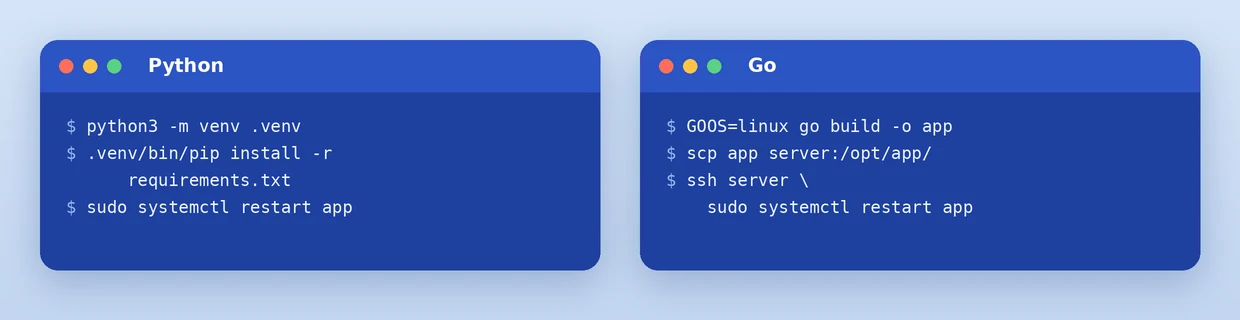
- Python ships with Ubuntu and most distributions, because system utilities are written in it. All that remains is to create a virtual environment and install dependencies with one command.
- Go compiles into a single executable. You copy it to the server and run it; the language itself does not need to be installed there. You can build the Linux file right on Windows or macOS.
- PHP is available on any shared hosting, but on a clean VPS you have to set up a web server and PHP-FPM.
- Node.js has to be installed separately, and the node_modules folder quickly grows to hundreds of megabytes.
Where the tokens go
People tend to think tokens are spent on the code the model writes. In fact most of them go to reading: on every call the model receives the project files, error messages and logs again. So the better language is the one where the same result fits into less text.
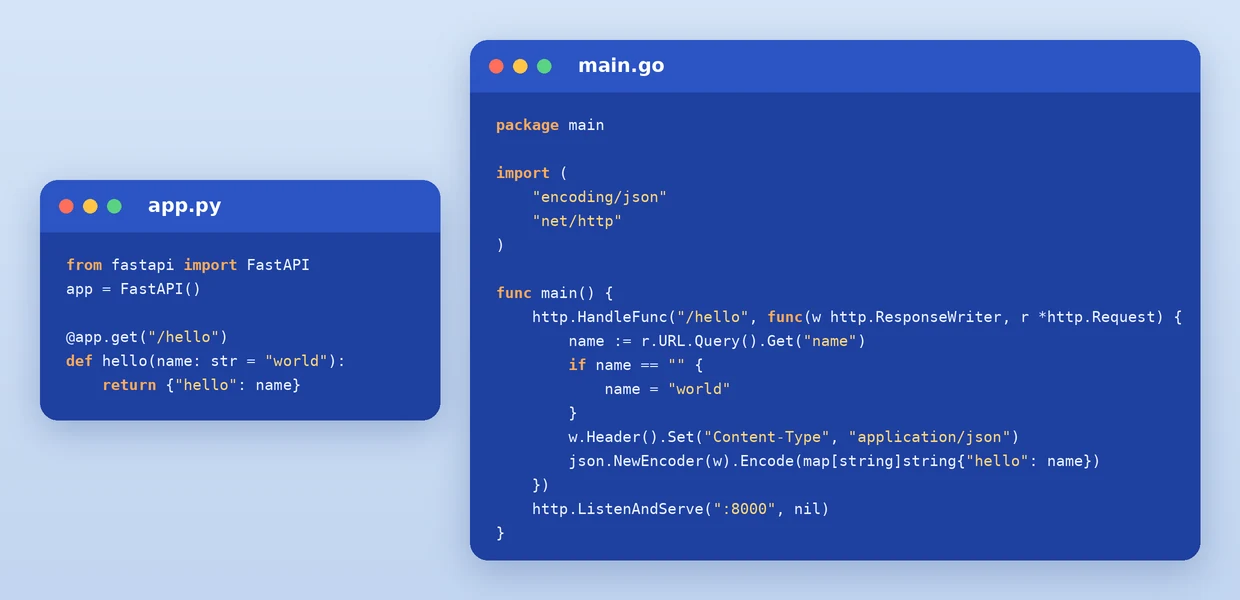
- Concise code. On the same tasks, Python, Ruby and JavaScript produce noticeably fewer tokens than Java, C# or C++. Go sits in the middle: it has many repetitive checks like if err != nil.
- Fewer dependencies. Python's standard library covers HTTP, JSON, SQLite, dates and files. The fewer third-party packages, the less the model has to read and guess.
- Short errors. A Python error points to the file and line in a few lines of text. TypeScript and Java builds produce long stack traces and warnings, and every such wall of text costs tokens.
- Fewer rounds of fixes. Every model mistake means another pass with the full context. That is why knowing the language matters more than brevity.
TakeawayThe cheaper language is not the one with less typing, but the one where the model reads less and makes fewer mistakes. Python wins on both counts.
How well the neural network knows the language
Most open-source code, examples and forum answers are written in Python and JavaScript, and models write them with the fewest mistakes. Languages like Clojure or Elixir are concise too, but models make more mistakes in them, and fixes eat the tokens that brevity saved.
Strict types, as in Go, Rust or TypeScript, help catch an error before running, and that is their advantage. In Python, part of this benefit comes from type hints and tests: the model writes them without extra prompting if the project is set up that way.
Comparing languages
- Python: available on the server right away, short code, best known to models. Downsides: slower than compiled languages and needs a virtual environment. For websites, bots, APIs and automation this is not a problem.
- Go: a single file, fast start, low memory, handles high load easily. Downside: longer code, so more tokens go to generation and reading.
- PHP: works on any hosting, and models know it well. Downside: more setup on a VPS, and old projects contain many outdated techniques the model may repeat.
- JavaScript and TypeScript: convenient when the frontend and server are written in one language. Downsides: heavy dependencies, long build errors, frequent tooling changes.
- Rust: maximum speed and reliability. Downside: the model runs into compiler checks more often, so it needs the most fixes and tokens.
- Java and C#: good for large teams, but verbose and heavy to deploy for vibe coding.
TakeawayPython fits most vibe coding tasks. Go is for when you need a single file and high load. PHP is for projects on ordinary hosting.
How to save tokens in any language
- Describe the project in one file: how to run it, how to run the tests, where things are. The model will not have to work this out again on every call.
- Use the standard library instead of a dozen packages for small tasks.
- For light load, SQLite or JSON files are enough instead of a separate database server.
- Keep files medium-sized: the model rereads one huge file in full, while a hundred tiny ones make it search for a long time.
- Tests run with one command and print briefly, for example pytest -q.
- Do not paste whole logs into the chat: the last lines or the lines with the error are enough.
- Use the standard nginx and systemd setup. The model knows it by heart and does not spend tokens on anything exotic.
Frequently asked questions
Which programming language is best for vibe coding?
For most projects on your own server, Python. It comes preinstalled on Linux, the code is short, and neural networks write it with the fewest mistakes.
In which language does a neural network spend the fewest tokens?
In concise languages that models know well: Python, JavaScript, Ruby. What matters is not only code length but also the number of fix rounds: every mistake makes the model reread the whole context.
Can you vibe code in Go?
Yes. Models know Go well, and the result is a single executable that runs on any Linux server. The price is longer code and more tokens for generation.
Does a small project need a separate database?
Usually not. For a website, bot or internal service, SQLite or JSON files are enough: they are easier to move, and the model does not have to set up a separate database server.
What server does a Python website need?
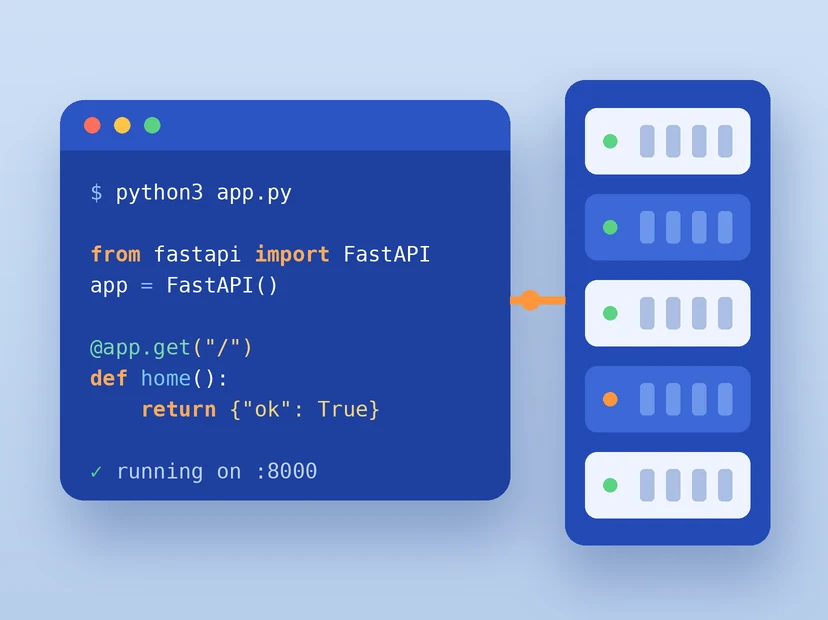
A small FastAPI or Flask site is fine on a VPS with one CPU and 1 GB of memory. The standard setup is nginx in front of the app and systemd for autostart.
Bottom line
For vibe coding on your own server, Python is the best default choice. It is already on the server, the code is short, and models write it with the fewest mistakes. Choose Go if you need a single file with no dependencies, high load or many identical servers. PHP fits if the project lives on ordinary hosting.
Need a project on your server?
We will choose the stack, set up the server and configure AI-assisted development so that you do not overpay for tokens.