AI agents for business are neural-network-based programs that do the work rather than just answer questions: they handle requests, talk to customers, and work with documents and knowledge bases, all connected to your systems. Digital Structures designs and deploys such agents and assistants and, when needed, runs them inside the client's own perimeter. Here we explain which work you can hand over to an agent, how deployment goes and what determines the timeline and cost.
- 24/7
agents work around the clock, with no days off - 5 stages
from choosing the task to scaling
How an AI agent differs from a chatbot
A regular chatbot follows a script: it recognizes a question from a predefined list and returns a prepared answer. One step off the script and it offers to call an operator. An AI agent understands free-form text, relies on your knowledge base, CRM and documents, and takes action itself: it creates a task in the CRM, prepares a commercial proposal or a draft email, or checks a document against your rules.
At the same time, the agent does not replace people where a decision is needed: it passes complex questions to an employee, so the customer is never left without an answer and the team focuses on what really requires its involvement.
Which tasks AI agents take over
It makes sense to hand an agent work that repeats day after day, relies on clear rules and data and still takes up a noticeable share of employees' time. Below are the main areas where we deploy agents.
Requests and sales
The agent sorts incoming inquiries, qualifies customers, prepares commercial proposals and creates tasks in the CRM. A manager receives a request that is already sorted, not a stream of emails.
Customer assistants
Answers in messengers and on your website based on your knowledge base. The agent passes complex questions to an employee.
Working with documents
Recognizing and extracting data, checking against rules, drafting contracts and letters.
Monitoring and analytics
Tracking tender platforms and other sources, summaries and notifications for the team.
Data and security: an agent inside your perimeter
An agent is only useful when it works on your data, so we connect it to your knowledge bases, CRM and documents. This raises a question: can such data be passed to external services?
- Deployment inside your perimeter. When data cannot leave the company, we deploy the solution on-premise: local models and closed infrastructure.
- Trusted AI. For protection we use our own VERIDIC technologies.
- Integration with your systems. The agent connects to CRM, email, messengers and accounting systems and works in them according to defined rules.
TakeawayAn AI agent is not a separate chat but a participant in the process: it works on your data, in your systems and, when needed, inside your perimeter.
How an AI agent is deployed
We start not by choosing a model but by choosing a process where the agent will deliver a measurable result. Then we check quality on your data and expand the solution only after a pilot.
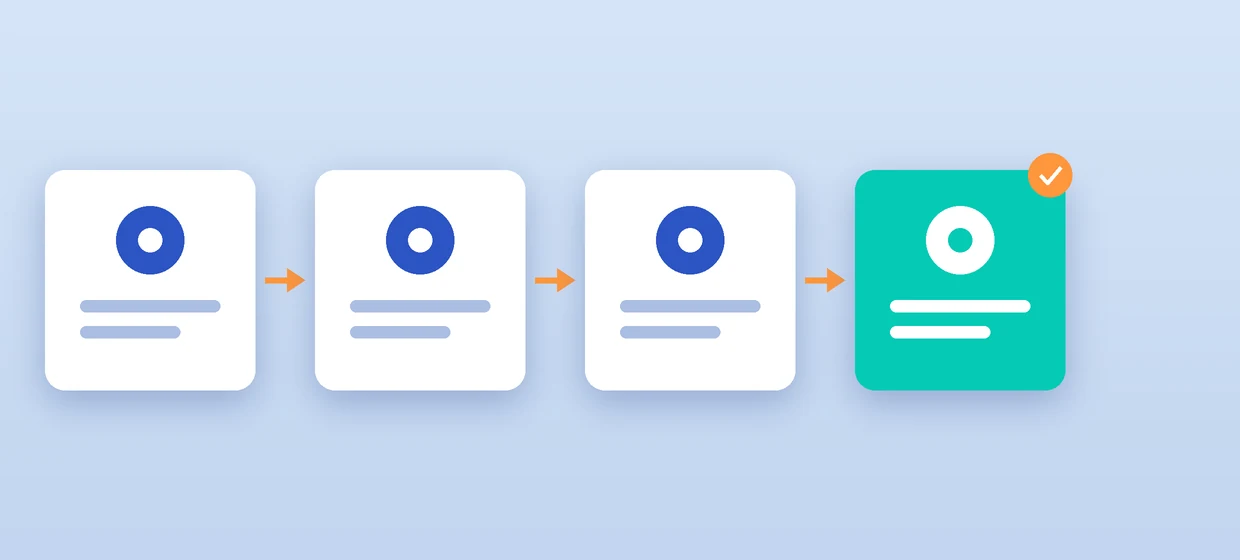
- Task and metrics. We choose a process where the agent will deliver a measurable effect.
- Prototype. We build a prototype on your data and check its quality.
- Integration. We connect the agent to CRM, email, messengers and accounting systems.
- Pilot. We launch it on part of the process and measure the effect.
- Scaling. We extend it to other processes and provide support.
A pilot on part of the process lets you compare the result with how the work went before, using the metrics chosen at the first stage. If the effect is confirmed, the agent is extended to other processes.
In parallel, we teach employees to set tasks for agents and check the results; our AI training programs are designed for this.
Examples of use
- Logistics. An AI agent for freight lot requests monitors platforms 24/7, filters lots, checks counterparties and submits the request itself.
- Municipal services. Video analytics for a Smart City: neural networks track incidents in real time, from burst pipes to illegal dumps, and send requests to the relevant services.
- Training. A logistics company's team mastered AI in 3 days: the sales, procurement and support departments learned to work with AI agents in a safe sandbox.
Agents are also built into broader business process automation projects, where they sort requests and emails, check documents and prepare replies.
What determines the timeline and cost
There is no off-the-shelf price list for AI agents: each agent is built for a specific process. The timeline and budget depend on:
- how many processes and scenarios the agent must cover;
- which data sources need to be connected and how well organized the knowledge base is;
- which systems require integration: CRM, email, messengers, accounting systems;
- where the agent runs: in an external service or on-premise on local models;
- data protection requirements;
- the scale of the pilot and further expansion;
- whether team training is needed.
TakeawayIt pays to start with one process that has a clear metric: the prototype and pilot show the effect on part of the work before you invest in scaling.
Frequently asked questions
How much does it cost to deploy an AI agent for business?
The cost depends on the number of scenarios, data sources and integrations, and on whether on-premise deployment is needed. We give an estimate once the task and metrics are chosen, and the prototype and pilot let you check the effect before scaling.
How long does it take to deploy an AI agent?
It depends on the complexity of the process and the number of integrations. Deployment goes through a prototype and a pilot, so you see the first result on part of the process before the full launch.
How is an AI agent different from a regular chatbot?
An agent does the work rather than just answering questions: it handles requests, talks to customers, and works with documents and knowledge bases, all connected to your systems.
Can an AI agent be deployed inside our perimeter?
Yes. When needed, we deploy the solution on-premise: local models and closed infrastructure are suitable when data cannot be passed to external services.
What does the agent do if it cannot answer a customer's question?
The agent passes complex questions to an employee, so the customer is never left without an answer.
Let's discuss what work to hand over to an agent
Tell us which process takes up most of your team's time, and we will suggest where an agent can deliver a measurable effect and build a prototype on your data. More about the service is on the AI agents for business page, and you can reach us via contacts. You can also book a free consultation.